LEROYPENNYSAVER&NEWS -AUGUST23, 2015
FieldToForkFeast -AGrassRootsProject
byLynneBelluscio
On September 3, a hundred
people are paying $100 each to
sit down to a dinner including
wine and dessert in an alfalfa
field on the Stein farm on Heb-
bard Road in LeRoy. It is one
of several fund raising events
to support LeRoy and Bergen’s
quest tobecomeAmerica’sBest
Community.
The dinner, which is called
“Field to Fork Feast” will be
a unique opportunity to enjoy
the bountiful harvest from our
local farms. The menu is being
designedby localchefextraordi-
naire - andorganizer ofGrace’s
Kitchen–SelbyDavis. The food
isbeingpreparedby localcaterer
extraordinaire – D&R Depot.
The farm products are being
donatedbyour local agricultural
community – extraordinaire.
And the alfalfa field - -- well
lets just say it will be an extra
ordinary experience!
Analfalfafielddoesn’t sound
tooexciting, somaybewecould
use the other name for alfalfa
- - “lucerne.” In fact Europe,
Australia, andmost of the rest of
theworld call it lucerne. It is an
extraordinarycrop. It isbelieved
tohaveoriginated in the far east
and was known to the ancient
Greeks andRomans. Today it is
oneof themost - - ifnot themost
important forage crops used for
feeding livestock.
There is evidence that some
Colonial farmers in the North-
eastern United States, in the
1790s were growing small
amounts of alfalfa, but it was
not widely known. Surpris-
ingly, the introduction of al-
falfa - and the name of alfalfa,
came to California from South
America about the time of the
gold rush in 1849. The use of
alfalfa moved east during the
19th century. It was difficult to
grow in the colder climate of
theNorthernPlainsandCanada,
but plant scientistswereable to
developvarieties that canadapt
to colderweather.
Alfalfa is a perennial plant,
which means that it grows year
after year and although plants
usually live eight to ten years,
it has been known to survive for
up to twentyyears.Aroundhere,
alfalfa fields are
usuallypart of crop
rotation and after a
coupleof years, the
alfalfa is plowed
under,enriching the
soil. It is in the
pea family, and it
is a legume, which
means that unlike
many other crops,
such as corn that
takesnutrients from
the ground, alfalfa
adds nutrients.
Alfalfa can be
harvested andused
in several ways. It
can be cut, dried
and baled like hay. It can be cut
and placed into a silo, or a bank
storage, and allowed to ferment
as ensilage which is very nutri-
tional for cattle. It can also be
processed into dry feed.
In the 1940s, LeRoy had an
alfalfaplant. Itwas located in the
huge stone building on Church
Street - the formermaltprocess-
ing building. (It was torn down
long ago.) Jessie Moulton was
themanager of the alfalfa plant
andhewasalso thefirstpresident
of theRotaryClub.
Our files do not have a lot of
information about the alfalfa
plant or when it closed, but it
was justoneofmanyagricultural
relatedbusinesses in townwhich
includedacanning factory,flour
mills, apple and fruit drying fa-
cilities, andLeRoy
Plow Company.
Industry inLeRoy
was closely relat-
ed to agriculture.
Which brings us
back to the alfalfa
field.
Today,LeRoy’s
largest economic
factor is its agri-
culture. For every
“farmer” there are
14 additional re-
lated jobs. But to
sustain theagricul-
tural baseandpro-
vide stability and
makeplans for the
future,ouragricul-
tural community
needs agricultural
related industry.
All of that information needs
to be included in an economic
revitalization plan - - - and that
is being done, because LeRoy
andBergenwereselected tobea
partof theAmerica’sBestCom-
munity program sponsored by
Frontier Communications, Dish
Network, theWeather Channel,
andCoBank.
It costsa lotofmoney tohave
an economic revitalization plan
written, and LeRoy and Ber-
gen were given ... yes given ...
$50,000 topay for the plan. But
we have to raise an additional
$15,000 to reach $65,000.
Some of that $15,000 has al-
readybeenpledged.TheTownof
Bergenand theVillageofLeRoy
have put in $2,000 each. The
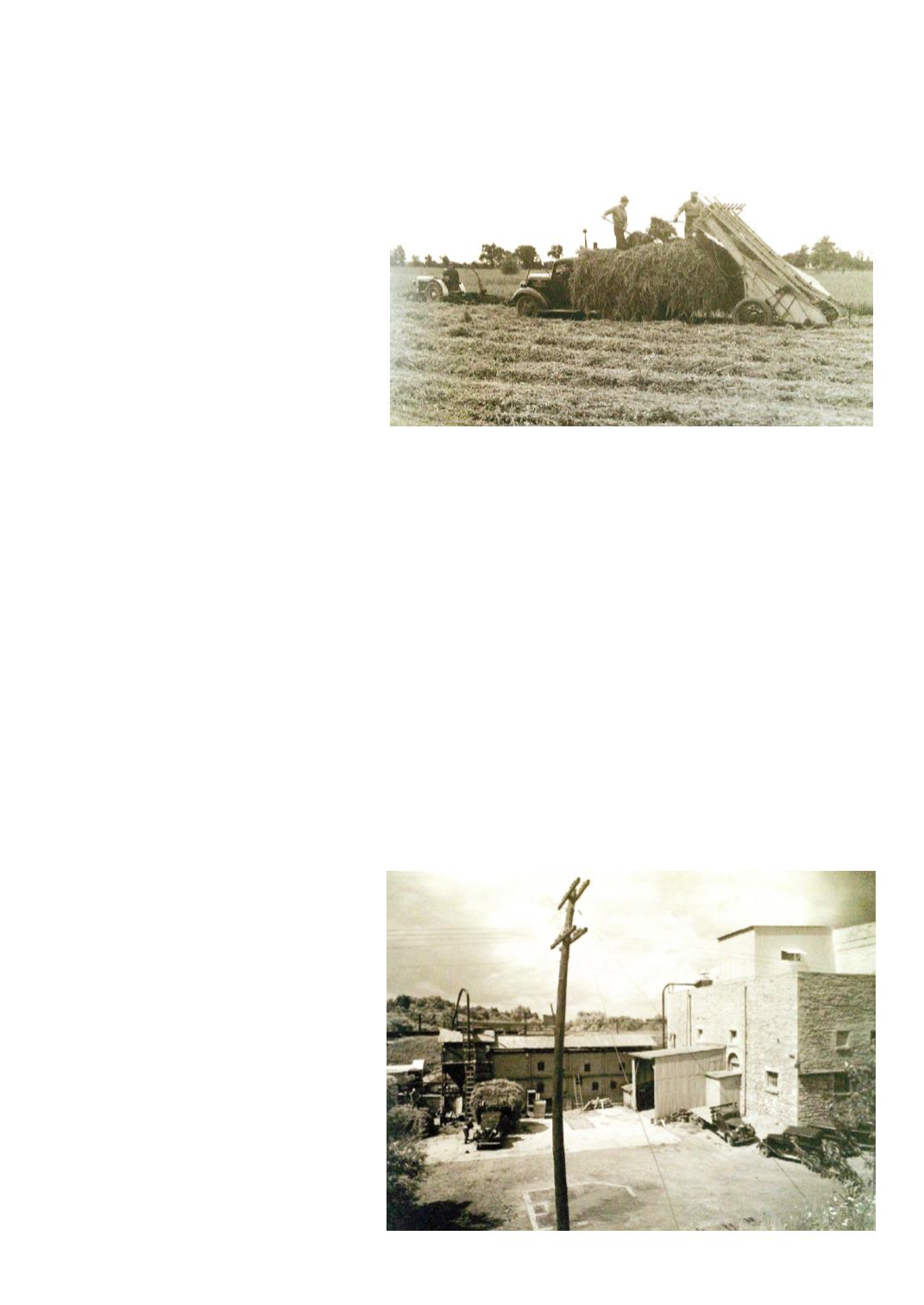
Alfalfafield andhay loader inLeRoy. Photo - 1940Book.
Alfalfaplant onChurchStreet 1940.
TownofLeRoywill bepledging
acoupleof thousand.Andweare
counting on raising$5,000with
the Field to Fork Feast. We are
alsoplanninganother fund raiser
called“Invest in theBest”which
will be announced soon.
Allof thisdemonstrates to the
America’s Best Communities
judges, that we are committed.
We have the ability to pull our
communities together for a
common cause. And that it is a
grass rootsproject. Anddidyou
know that alfalfa rootscangrow
tonearly40 feet into theground?
Now that is a grass roots fact!
Tickets toField toForkFeast
are still available by contacting
SamVaggat993-5555orsvagg@
bhcg.com for information.


